

Gum Recession. Check if Your Gums Are Healthy
Disclaimer: Not medical or professional advice. Always consult your physician for advice.

Have you noticed that some of your teeth look longer than before? This is a common sign of gum recession. The gum line gradually shifts down or up, exposing the neck of the tooth and part of the root.
Gum problems are more often associated with bleeding, redness, and swelling. Patients expect these symptoms. Recession progresses differently.
To see if you have recession, hold a mirror and look closely at your gum line. Notice if it has become lower than before, if the cervical area of the tooth has become exposed.
If you notice at least one of these symptoms, do not delay your consultation. In the early stages, the process can be stopped and tissue preserved without surgical intervention.
Make an appointment at Dental World. The earlier the examination is performed, the higher the chance of preserving gum volume and avoiding further root exposure.
Your Teeth Look Longer Than Before. This May Be an Early Sign of Gum Recession
What Gum Recession Actually Means for Your Teeth
Gum recession develops slowly and may go unnoticed for a long time. At first it may seem as if the tooth has simply become a little longer. In reality, the gum tissue has moved away from the tooth and part of the root has become exposed.
This change is not only a cosmetic concern. The gum and surrounding tissues help anchor the tooth within the bone. When these supporting structures are gradually lost, the stability of the tooth is affected.
In advanced cases, a tooth can be lost even when there is no cavity or visible damage to the enamel. The problem is not the surface of the tooth. The problem is the loss of the tissues that hold the tooth in place.
Stages of Gum Recession
Stage 1
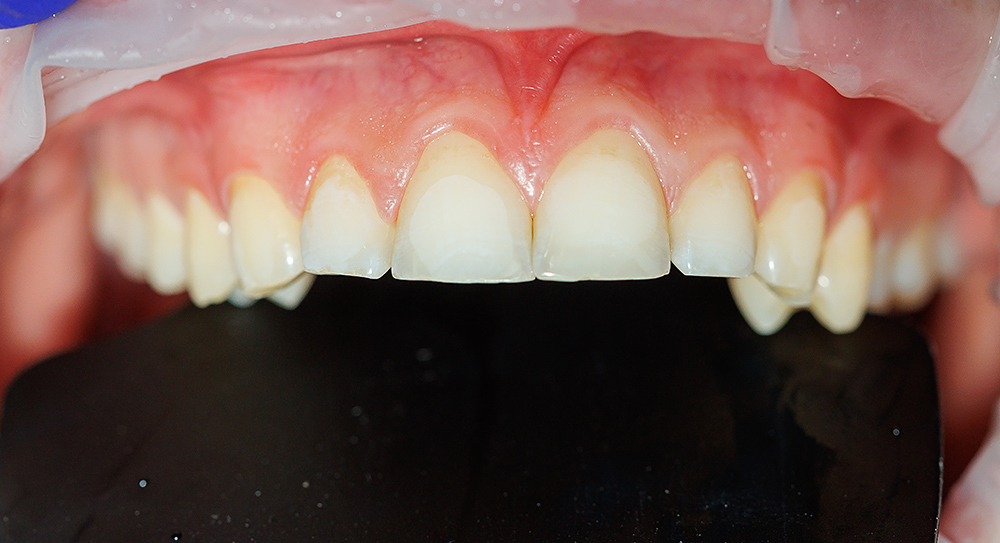
You look in the mirror and notice almost nothing. The gum line has receded just a little. About one millimeter of the root is exposed. This is difficult to see, especially if you don't compare it with previous photos.
Sometimes there is slight sensitivity to cold water or hot tea. It passes quickly, so it seems like a coincidence or a reaction to brushing.
At this point, most often nothing is done. There is no pain, the tooth is in place, and discomfort is minimal.
The gum tissue itself does not return to its previous level. If the cause of the displacement persists, the process will continue, even if it seems insignificant now.
Stage 2
Now you can see the changes. A clear transition line appears at the edge of the gums. The upper part of the tooth is light and smooth. Below, a more yellowish area is visible. This is not plaque or a stain. It is the root of the tooth, which was previously completely covered by the gums.
The tooth begins to react more often and more strongly. If unpleasant sensations used to occur occasionally, now a sip of cold water or a breath of cool air is enough. Acidic foods can also cause sharp, short-term pain. When brushing, discomfort appears in the gum line area that was not there before.
The root is naturally more vulnerable than enamel. It is softer and more prone to plaque buildup. Root caries develops more easily in this area, progressing faster and deeper. Due to changes in the shape of the gums, small gaps appear between the teeth. Food begins to get stuck, and it becomes more difficult to clean these areas.
Stage 3
Now the changes can no longer be ignored. The tooth looks noticeably longer. The exposed part is clearly visible when talking and smiling. Sometimes it is the appearance that makes you seriously think about the problem for the first time.
Bad breath becomes constant, even with regular brushing. Hard plaque quickly accumulates at the gum line. The gums may bleed during brushing or eating.
You begin to feel that the tooth is no longer as stable as before. There is a feeling of slight mobility or pressure when chewing. This is a sign that the process is affecting the tissues that hold the tooth in the bone.
At this stage, waiting only makes the situation worse. Without treatment, the risk of tooth loss becomes real.
Stage 4
At this stage, the tooth is no longer held in place by the tissues as it should be. The gums are thin, and some bone has been lost. The tooth may be loose or need to be removed.
The dentist's task in this situation is not to stop the process, but to restore what has been lost. If the tooth cannot be saved, it is replaced. Most often, an implant or bridge is considered. The decision is made after assessing the bone volume and gum condition.
An implant cannot be placed in an area with a significant tissue deficiency. If there is a lack of bone or gum tissue, surgical restoration of the volume is performed first. This is a separate stage of treatment, which increases the duration and cost.
That is why it is so important to seek treatment earlier, when it is a question of preserving your own tooth rather than replacing it.
Causes of Gum Recession

Recession rarely occurs for one reason alone. More often, it is a combination of trauma, inflammation, and individual tissue characteristics. Below are the main factors that we see in clinical practice.
Trauma During Tooth Brushing
The most common cause. A hard brush, strong pressure, horizontal movements. You try to clean better, but end up gradually traumatizing the gum line.
The canine and incisor areas are most often affected. In these areas, the gums are thinner, and the bone is closer to the surface, so the tissues react more quickly.
Inflammatory Gum Disease
Gingivitis and periodontitis lead to the destruction of the tooth's ligamentous apparatus and a reduction in bone volume.
When the inflammation becomes chronic, the gums lose their tight contact with the tooth. The bone gradually recedes, leaving the tooth without adequate support. Outwardly, the situation may appear moderate, although tissue loss is already occurring internally.
Incorrect Load on the Teeth
Malocclusion, missing chewing teeth, and redistribution of the load on the front teeth create excessive pressure. The front teeth are not designed for constant chewing.
Bruxism exacerbates the problem. When grinding, the pressure significantly exceeds the physiological norm. Not only the enamel suffers, but also the gums and bone tissue.
Excessive Pressure on Certain Teeth
Uneven bite forces can also contribute to gum recession. This may happen when the bite is misaligned, when chewing teeth are missing, or when the chewing load shifts toward the front teeth.
Front teeth are not designed to carry constant chewing pressure. When they are forced to take on that role, the surrounding tissues begin to experience excessive stress.
Bruxism can make this situation worse. During grinding or clenching, the force on the teeth rises far above normal levels. Over time, this pressure affects not only the enamel but also the gums and the supporting bone.
Anatomical Characteristics of the Tissues
Some people naturally have thinner gum tissue and bone that lies very close to the surface of the tooth. This structure is sometimes described as a thin gum biotype.
When tissues are built this way, they react more quickly to mechanical stress. Even moderate pressure from a toothbrush may gradually push the gum line away from the tooth.
In these situations, the dentist usually recommends specific hygiene tools and brushing techniques that are adapted to the individual structure of the tissues.
Tension From a Low Frenulum Attachment
The frenulum is the small fold of tissue that connects the lip to the gum. When it attaches too close to the gum margin it can place constant tension on the tissues during speaking and eating.
Over time, this repeated pulling may contribute to a gradual shift of the gum line.
Poor-quality Fillings and Orthopedic Structures
A filling with an overhanging edge, a crown with an improper fit, or a bridge structure that presses on the edge of the gum cause constant mechanical irritation.
Plaque accumulates in this area, tissues become inflamed, and blood supply is disrupted. The gums gradually lose their tight fit to the tooth and shift. There may be no pain. The process is slow.
Orthodontic Treatment
During treatment, the teeth are moved to a new position. Sufficient bone volume must be maintained for safe movement around the root.
If the bone is initially thin or the tooth protrudes too far outward, part of the root may be outside the bone support. The gums do not exist separately from the bone. Where there is no bone, they become thinner and shift over time.
As a result, recession may occur in the area of the moved tooth. In some cases, soft tissue reinforcement is performed before or after orthodontic treatment to reduce the risk of root exposure.
Iatrogenic Trauma
Sometimes gum recession develops after dental procedures. When a tooth is prepared for a crown, the gum is temporarily displaced with a special retraction cord so the dentist can work near the margin of the tooth.
If the tissue is very thin or the procedure is performed aggressively, the gum may not fully return to its original position afterward. Over time this can contribute to a visible shift of the gum line.
Chronic Mechanical Irritation
Repeated mechanical pressure on the gums can also lead to gradual recession.
- Lip piercings, especially when they rest against the front teeth, constantly irritate the soft tissue.
- Habits such as biting nails, pens, or other objects place repeated pressure along the gum margin.
- For people who play wind instruments, the mouthpiece can apply steady force to the front teeth and surrounding tissues.
In many cases, these factors can be corrected early. When the cause is identified in time, the chances of preserving gum tissue and avoiding surgical treatment are much higher.
Treatment of Gum Recession
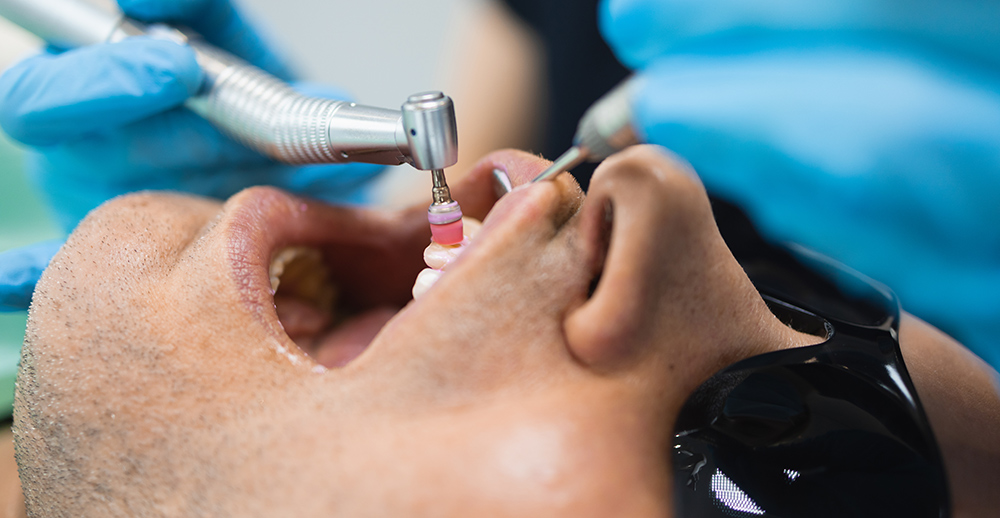
The approach depends on the depth of the defect, the condition of the bone, and the cause of the displacement.
Conservative Stage
When gum exposure is minimal and the supporting tissues are preserved, the goal is to stop further loss. During the appointment, the doctor assesses hygiene techniques and areas of overload. A toothbrush and care products are selected taking into account gum thickness and sensitivity. The cleaning method is adjusted to prevent trauma to the gum line.
Professional cleaning is performed. Tartar is removed and inflammation is relieved. Without plaque control, the tissues will not stabilize.
For bruxism, a custom night guard is made. It reduces pressure on the teeth and surrounding tissues.
Surgical Treatment
If a significant portion of the root is exposed and the gum tissue has become thin, the defect is usually treated surgically.
During the procedure, the surgeon repositions the patient’s own gum tissue over the exposed root and secures it in the correct position. When the existing tissue is too thin, additional tissue may be added. Most often this graft is taken from the palate. In some cases, special biomaterials are used to increase tissue volume.
If excessive tension in the area is contributing to the recession, the frenulum may also be corrected to remove the constant pull on the gum.
Healing Period
Modern surgical techniques are designed to be as gentle as possible. Severe pain is uncommon. Some temporary discomfort may occur in the donor area on the palate during the first few days.
The long-term result depends not only on the surgery itself. If traumatic brushing, inflammation, or excessive pressure on the teeth continues, recession can develop again. In more complex cases, additional procedures to increase tissue volume may be required.
Final Thoughts
Gum recession does not occur on its own. It is always the result of overload, inflammation, or anatomical features.
If you see an exposed root or feel tissue tension, do not expect the situation to stabilize on its own. During the appointment, the doctor takes photos, shows you the changes, and explains why they occurred in your case.
Injections of vitamins or hyaluronic acid into the gums do not eliminate the cause of recession and do not restore lost tissue volume. They do not restore bone or cover the exposed root.
A lasting result requires a systematic approach. First, the factor that triggered the recession must be identified and eliminated. Then the condition of the bone and gum tissue is evaluated, and the appropriate treatment strategy is chosen. This approach makes it possible to preserve your natural teeth and achieve stable long-term results.