

How to Choose a Toothbrush that Really Reduces the Risk of Tooth Decay
Disclaimer: Not medical or professional advice. Always consult your physician for advice.
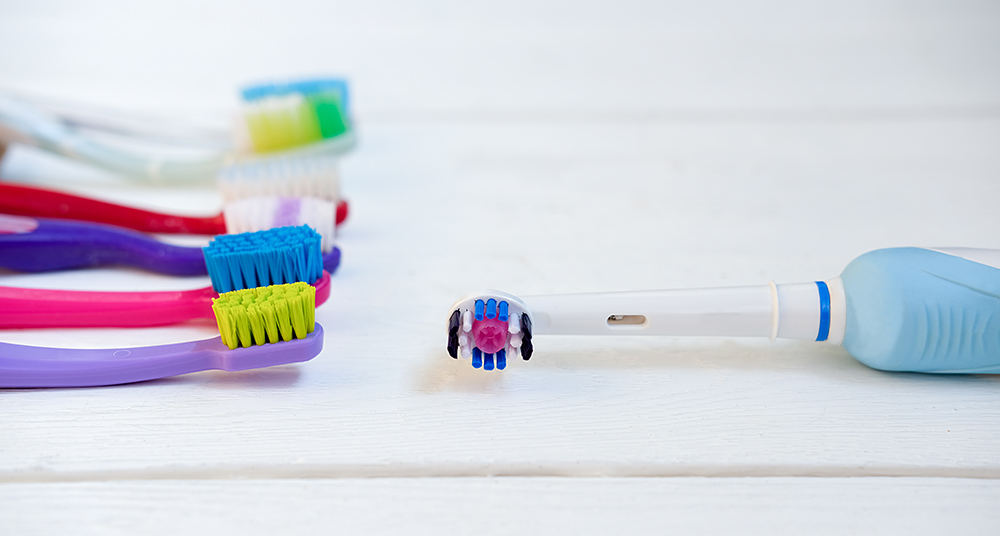
We often find the opinion that buying an expensive electric brush automatically solves the plaque problem. In practice, such patients then come with sensitive enamel, bleeding, and wedge-shaped defects.
A natural question arises. Is the problem with the brush, the paste, or the cleaning method?
Caries develops due to bacterial film. It is not the paste that removes it, but the mechanical action of the bristles. If plaque remains at the edge of the gum or in the interdental spaces, the risk of caries persists regardless of the brand of the brush.
The choice between a manual and an electric model is often perceived as the main criterion. However, two things are crucial. Whether the bristles are suitable for your teeth and whether you are using the tool correctly. With the right technique and proper nozzle selection, both systems can effectively clean teeth.
Next, let's look at which parameters really affect the result and which errors most often lead to problems.
How to Choose a Manual Toothbrush
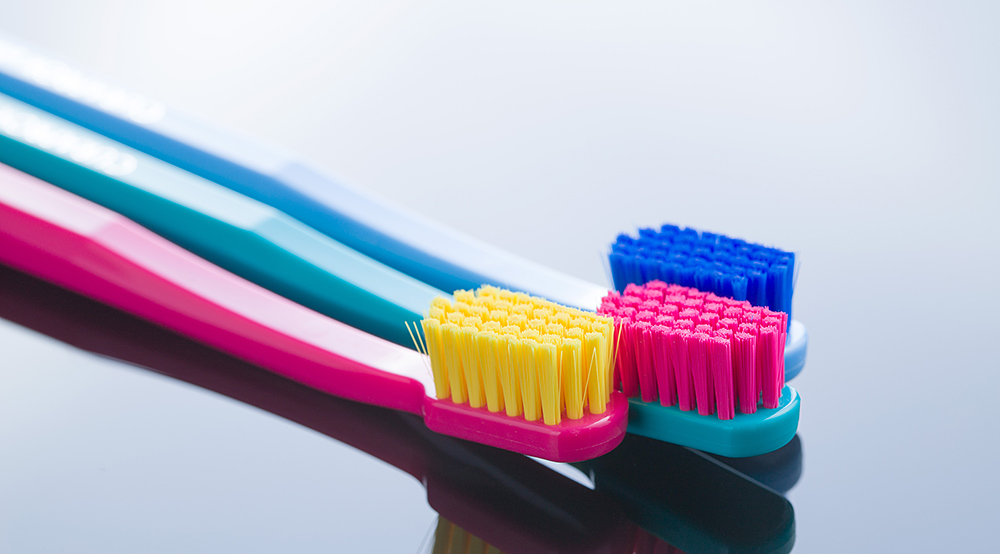
Manual toothbrushes work effectively. But only if they are suitable for your teeth and gums.
Bristle Hardness
Soft bristles are suitable for most adults and children. They remove plaque without damaging the gum line.
Medium bristle hardness is acceptable if the enamel is dense and there is no sensitivity. It is better to use such a toothbrush in courses rather than on a permanent basis.
Hard brushes are not suitable for constant use on natural teeth. They wear down the enamel very quickly and damage the gums. Toothbrushes with hard bristles are used as directed by a doctor, for example, for caring for dentures.
If your gums bleed after brushing or your enamel has become sensitive, the tool is not suitable for you.
Choose the Right Size Working Part
A brush that is too large is difficult to control. It is difficult to reach the back molars, place the bristles along the gums, and carefully clean the neck area. As a result, plaque remains exactly where inflammation most often begins.
The optimal option for an adult is a compact working part that covers approximately two teeth at a time. This size provides control and allows for more precise work.
A brush that is too small is also not ideal. It requires more movements and increases brushing time. When you are in a hurry, this leads to some areas being brushed several times, while others are missed.
A simple guideline: you should be able to reach the farthest teeth without effort and gently place the bristles against the gum line. If the tool rests against your cheek or does not allow you to control your movements, the size is not right.
Bristle Quality Matters More Than the Logo on the Handle
Brand recognition does not determine cleaning efficiency. The structure and quality of the bristles do.
Modern toothbrushes should use synthetic fibers such as nylon. Natural bristles absorb moisture, dry poorly, and quickly become a favorable environment for bacterial growth. Current dental guidelines consistently recommend synthetic materials for hygiene and durability.
The tips of the bristles must be rounded and polished. Under magnification, low-quality fibers resemble cut wire with sharp edges. These edges can injure the gum margin and increase abrasive stress on enamel over time. Smooth, rounded tips reduce trauma while maintaining effective plaque disruption.
Bristle density also plays a significant role. A higher number of thin bristles allows better penetration into the cervical area near the gumline and into interdental spaces. At the same time, pressure is distributed more evenly across the tooth surface, which lowers the risk of soft tissue injury.
Decorative rubber inserts and silicone strips often reduce the actual working surface of the brush head. From a clinical standpoint, these additions do not improve plaque removal.
An effective manual toothbrush typically contains between five and twelve thousand thin bristles. When bristles are few and thick, force concentrates on isolated contact points. That affects both comfort and cleaning quality.
In 2017, researchers in Poland evaluated how effectively adults cleaned their teeth using standard manual brushes. After routine brushing, about 65 percent of participants still had visible bacterial film. Most believed they had brushed thoroughly. Objective assessment showed otherwise.
The conclusion was clear. Effort alone does not guarantee plaque removal. The tool must support the user. A well-designed brush relies on dense, properly finished bristles so that effective cleaning does not depend on perfect technique alone.
When to Replace Your Toothbrush
Your toothbrush stops working before you notice it. If the bristles are bent to the sides and no longer stand upright, they are no longer cleaning the gum line as they should. Contact with the tooth surface becomes loose, and plaque is not removed as effectively. Don't wait three months, as recommended by the manufacturer. On average, it makes sense to change a manual toothbrush every six to eight weeks.
Proper Technique Determines Whether You Clean or Cause Damage
Fast horizontal scrubbing with heavy pressure does not improve hygiene. It polishes enamel and increases the risk of abrasion.
Position the bristles at roughly a forty-five-degree angle toward the gumline. The tips should gently enter the cervical area where plaque accumulates. Use short, controlled motions rather than sweeping movements.
Work in small sections instead of brushing the entire mouth at once. Focus on two or three teeth at a time. Clean the outer surfaces first, then the inner surfaces, and finish with the chewing surfaces. For the inner surfaces of the front teeth, hold the brush vertically and use the tip for precise contact.
Pressure matters more than most people think. A simple test can help. Press the bristles against your fingernail. If the nail bed turns white, the force is excessive. Bristles should flex slightly, not collapse flat.
Effective manual brushing takes at least three minutes. If you finish in under a minute, plaque almost certainly remains. If you are uncertain about your technique, ask your dentist to demonstrate it during your appointment. A brief correction can significantly reduce the need for future restorative treatment.
How to Choose an Electric Toothbrush

Electric toothbrushes perform thousands of movements per minute. This reduces the need for accurate hand movements.
The most common problem is that people continue to brush with an electric toothbrush in the same way as with a manual one. They start to press down hard. They make sharp horizontal movements. They try to “help” the motor.
This is why some patients experience sensitivity or signs of recession after switching to an electric toothbrush. The problem is not with the technology, but with the technique.
Pressure Indicator
Modern models are equipped with a pressure sensor. If you press too hard, a red indicator lights up or the rotation speed decreases.
This is a useful feature, but it does not replace understanding the process.
Who is an electric toothbrush suitable for?
- You find it difficult to follow the technique
- You don't have enough time for thorough manual cleaning
- You have reduced hand motor skills
How to Choose the Right Electric Toothbrush
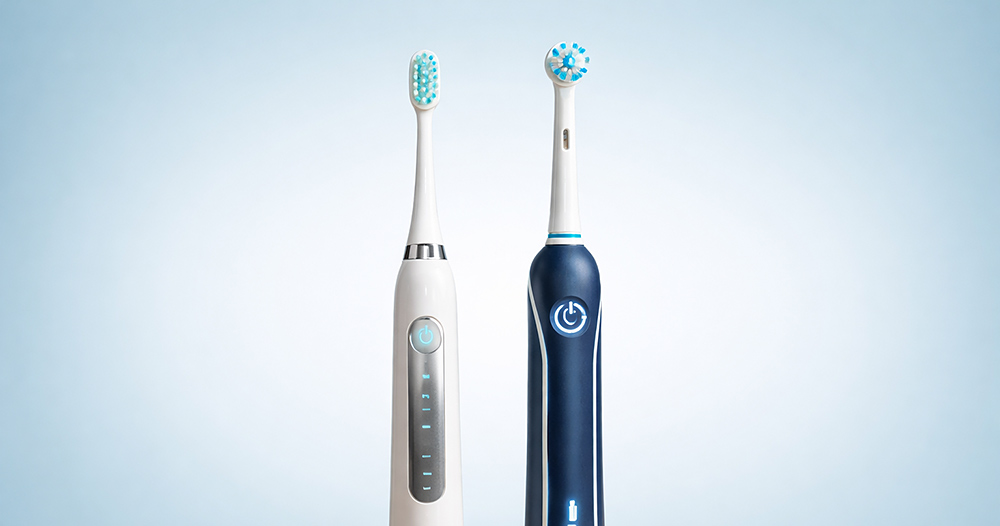
Electric toothbrushes differ in how they work and the type of brush head they have.
- If you have healthy gums and dense plaque
Rotating or oscillating models with a round brush head are suitable. This type of brush head covers one tooth and effectively breaks down dense bacterial film. This is a good option for people without sensitivity or recession.
- If you have sensitivity or thin gums
It is better to choose sonic models with a soft brush head. They work by high-frequency vibration and create a hydrodynamic effect that helps remove plaque without aggressive friction.
- When to change the electric toothbrush brush head
On average, brush heads are changed every six to eight weeks. An indicator will tell you when it's time to do so. After an oral infection or hygiene treatment, it is best to replace the brush head to reduce the risk of bacterial contamination.
And don't forget. Even the most expensive model will not work effectively with a worn-out working part. It is the condition of the bristles that determines the quality of cleaning, not the body of the device.
Final Thoughts That Actually Reduce Cavity Risk
You can compare technologies and debate brands for hours. None of that changes one fact. Cavities develop where bacterial biofilm remains undisturbed.
A toothbrush cleans open surfaces. It does not fully address tight contacts between teeth, deep fissures, or the cervical area near the gumline. These zones require additional tools.
- Dental floss removes plaque from tight contact points.
- Interdental brushes work where there is enough space between teeth.
- A single tuft brush allows precise cleaning along the gum margin and around hard-to-reach areas.
- An irrigator can reduce bacterial load, but it does not replace mechanical disruption of biofilm.
The goal is not to own the most advanced device. The goal is to build a system that removes plaque consistently from all vulnerable areas.
When that system is in place, dental visits shift from restorative care to prevention.
More Information About Oral Health
- How to Strengthen Tooth Enamel?
- Interdental Brushes vs. Floss
- How to Get Rid of Dental Plaque?
- Why Sugar is Bad for your Teeth
- 10 Facts about Cavities
- How to take Care of your Tongue to Keep your Breath Fresh
- Why Do Teeth Darken?
- What to Do If Your Filling Falls Out
- Dental Cleaning
- Safe Toothpaste for Everyday Use