

Choosing a Safe Toothpaste for Everyday Use Means Looking Beyond Marketing Claims
Disclaimer: Not medical or professional advice. Always consult your physician for advice.
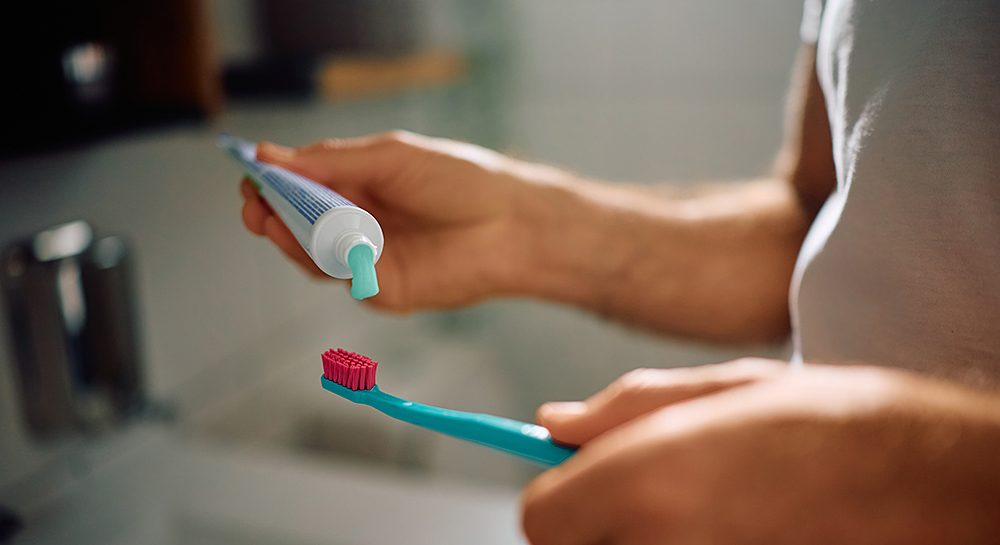
We usually buy toothpaste quickly. We look at the packaging, read about whitening and freshness, and make a decision in a minute. This is how we develop the habit of relying on feelings and promises. But the promise of white teeth and real enamel protection are two different things. Foam and bright flavors create the effect of cleanliness. But the condition of your teeth depends on the formula.
The composition may contain an aggressive foaming agent that dries out the mucous membrane. It may be highly abrasive, which can increase sensitivity. Or it may simply have a weak preventive base that has almost no effect on the risk of caries.
The price does not guarantee anything. An expensive tube does not always mean a well-thought-out composition. It is not difficult to figure this out. You need to understand a few key parameters. Now let's take a look at them calmly and in order.
Do You Have a Specific Complaint?
There is no such thing as a universal toothpaste. What suits one person may be unnecessary or even undesirable for another. Therefore, you first need to understand whether you have any specific complaints or characteristics. Here's what to look for.
- Do You Have Sensitive Teeth?
Do you feel a sharp, brief pain from cold water, hot tea, sweet or sour foods? The pain goes away quickly but occurs regularly. This may be a sign of increased enamel sensitivity or exposed dentin.
- Do you have frequent plaque buildup?
By evening, your teeth feel rough to the touch. A soft, light-colored plaque appears at the gum line or between the teeth. This is a normal process, but in some people, plaque forms more quickly due to the composition of their saliva, diet, and hygiene.
- Are you prone to tooth decay?
Have you had new cavities in the last few years? A good toothpaste contains xylitol, a natural ingredient with proven effectiveness in fighting tooth decay.
The answer to these questions directly determines the abrasiveness of the toothpaste you can use. Too high will increase sensitivity. Too low may not be able to cope with severe plaque.
- Are you prone to tooth decay?
Have you had any new cavities in the last few years? A good toothpaste contains xylitol, a natural ingredient with proven effectiveness in fighting tooth decay.
The answer to these questions directly determines the abrasiveness of the toothpaste you can use. Too high an abrasiveness will increase sensitivity. Too low an abrasiveness may not be able to cope with severe plaque.
Understand the Abrasiveness of RDA Toothpaste
RDA does not mean “safe” or “dangerous.” It is a comparative indicator that shows how actively the paste wears away dentin.
During research, a safe RDA (250 and below) was determined, and later a standardized test for manufacturers appeared, which became the basis for testing toothpastes for abrasiveness. In the laboratory, a sample of dentin is treated with toothpaste using a special brush. After a large number of movements, the amount of tissue worn away is measured and the result is compared to a reference value. The reference sample is assigned a value of 100. If the toothpaste wears away less, its value is below 100. If it wears away more, the value is higher.
RDA indicates the intensity of mechanical action. It does not take into account your brushing technique, brush pressure, or the condition of your enamel.
- An RDA of 30 to 50 is considered low abrasiveness. These toothpastes are suitable for sensitive teeth and for children.
- An RDA of 50 to 80 is considered medium abrasiveness. This is the standard range for daily care for most adults.
- An RDA of 80 to 100 provides more active cleaning. It is needed by people who develop plaque quickly. Such toothpastes are used in courses rather than on a permanent basis.
- An RDA above 100 indicates high abrasiveness. These toothpastes provide a quick visual whitening effect, but prolonged use will increase sensitivity. Consult your dentist before using such toothpaste.
Check Whether the Formula Contains Fluoride and in What Amount
Once you understand abrasiveness, move to the next critical factor: fluoride.
For most adults without fluorosis, fluoride toothpaste is considered the standard foundation of daily cavity prevention. Its role is well studied. Fluoride helps strengthen enamel and supports the remineralization process after acid exposure.
Do not rely on marketing phrases like enamel defense. Look for a number on the packaging measured in ppm, which stands for parts per million. For adults, the optimal concentration is typically between 1350 and 1500 ppm. This range provides effective protection against cavities in everyday use. If the concentration is below 1000 ppm, the preventive effect may be too weak for someone with moderate or high cavity risk.
Fluoride can appear under different names in the ingredient list. Common forms include sodium fluoride, stannous fluoride, sodium monofluorophosphate, and aminofluoride. Some manufacturers combine more than one form in a single formula. The name may vary, but what matters most is the total fluoride concentration expressed in ppm.
If your goal is evidence based cavity prevention, this number deserves careful attention before you buy.
Consider Hydroxyapatite if You Need Enamel Support or Avoid Fluoride
When reading the ingredient list, you may see hydroxyapatite or nano hydroxyapatite. This compound is structurally similar to the mineral that makes up natural enamel.
Its role is different from fluoride. Hydroxyapatite particles can help fill microscopic surface defects in enamel. This may improve surface smoothness and reduce sensitivity in some people. It supports the physical repair of early enamel irregularities rather than altering bacterial activity.
Many adults choose hydroxyapatite formulas when they prefer to avoid fluoride for personal reasons. It is also commonly used in children’s toothpaste because it is considered safe if swallowed in small amounts.
If sensitivity is one of your main concerns, or if fluoride is not part of your routine, this ingredient is worth noting on the label.
Look for Xylitol and Check Where It Appears in the Ingredient List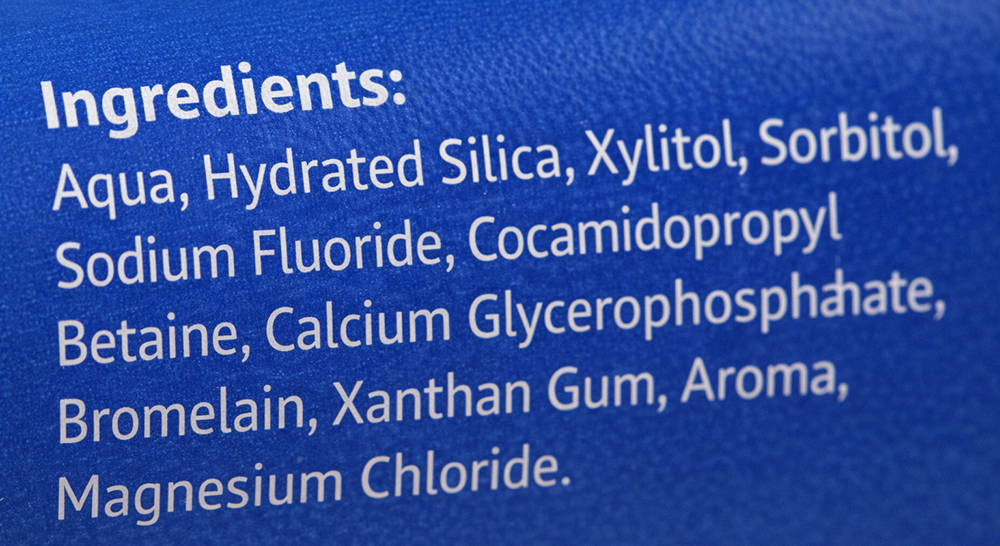
You may see xylitol in the composition of the toothpaste. It is not just a sweetener. It helps prevent tooth decay.
The bacteria that cause tooth decay use sugar as a source of energy. In the process, they produce acids. These acids destroy enamel. Xylitol looks like sugar, so bacteria try to use it. But they cannot process it. They do not get any energy. Acid production decreases. As a result, the aggressiveness of dental plaque is reduced.
If xylitol is listed at the very end of the ingredient list, its proportion is minimal. For a pronounced preventive effect, the concentration must be significant. Toothpastes usually contain about 3 percent or more.
Enzymes Support Plaque Control Without Increasing Abrasiveness
Dental plaque is not just loose bacteria. It is a structured biofilm made of microorganisms embedded in a dense protein matrix that helps it adhere to the tooth surface.
Traditional toothpaste removes plaque mainly through mechanical action. Abrasive particles scrub it away. Enzymes work through a different mechanism. They help break down the protein framework that holds plaque together. When this structure weakens, plaque becomes less stable and easier to remove during brushing.
On the ingredient list, you may see enzymes such as papain, bromelain, lysozyme, or components of the lactoperoxidase system. These names differ, but their goal is similar. They assist in disrupting plaque structure and supporting oral hygiene in a more biologically targeted way.
Enzyme based formulas are generally suitable for daily use. They can be especially helpful if you have sensitive gums or are prone to gingival inflammation. Instead of increasing abrasiveness to improve cleaning, enzymes allow manufacturers to maintain a gentler formula while still supporting effective plaque control.
Ingredients that Should Not Be in a Good Toothpaste
There are ingredients that you simply do not need in your daily toothpaste. If you see them in the ingredients list, there is no need to check the other parameters. Just don't buy that product.
- SLS
Sodium Lauryl Sulfate is responsible for foaming. It has almost no effect on the quality of cleaning. However, it causes dryness of the mucous membrane in many people and provokes aphthous stomatitis.
- Triclosan
An antibacterial ingredient that was previously actively added to toothpastes. Today it is used less frequently. It suppresses the microflora of the mucous membranes and disrupts their immunity. It should not be used without medical advice.
- Chlorhexidine
An antiseptic that is used as directed by a doctor for inflammation. It is not suitable for regular hygiene. With prolonged use, it can stain teeth and change the composition of the microflora in the oral cavity.
- PEG 8
Polyethylene glycol is used to stabilize and dissolve components. It increases tissue permeability.
- Soda
Sodium bicarbonate enhances mechanical cleaning. In toothpastes with a high RDA, this makes the formula aggressive. If you have sensitive teeth, it is better not to use such options on a regular basis.
- Titanium dioxide
Titanium dioxide is added to toothpaste as a white pigment. It is only responsible for the color and visual density of the formula. It does not affect cleaning, remineralization, or protection against caries. It can accumulate in the body.
Final Thoughts That Matter More Than the Brand Name
Even the most carefully selected toothpaste cannot compensate for rushed or incomplete brushing. If you miss surfaces, avoid flossing, or never check your technique in the mirror, the formula alone will not prevent dental problems. Effective plaque control still depends on mechanical cleaning. A toothbrush, dental floss, a single tuft brush, and interdental brushes remain essential tools.
If your toothpaste contains fluoride or hydroxyapatite, avoid rinsing with a full glass of water after brushing. Simply spit out the excess foam. This allows active ingredients to stay on the enamel longer and continue supporting remineralization.
Home care also does not replace professional cleanings. Plaque and tartar formation occur in most people regardless of how disciplined they are. The speed of buildup depends on diet, saliva composition, hydration habits, and overall health factors including stress. Schedule dental visits twice a year, or more frequently if you have gum disease, recurrent cavities, or other ongoing concerns.
A well chosen toothpaste supports your routine. It does not replace it.
More Information About Oral Health
- Interdental Brushes vs. Floss
- How to Get Rid of Dental Plaque?
- Why Sugar is Bad for your Teeth
- 10 Facts about Cavities
- How to take Care of your Tongue to Keep your Breath Fresh
- How Diabetes Can Cause Dry Mouth Symptoms
- Why Do Teeth Darken?
- What to Do If Your Filling Falls Out
- How to Choose a Toothbrush