

Your Jaw Clicks Sometimes. Is It Harmless or the First Sign of a Problem
Disclaimer: Not medical or professional advice. Always consult your physician for advice.

Jaw clicking bothers a lot of people. Almost one in five patients mention it during their appointment. The sound usually happens when yawning, chewing hard food, or when you need to open your mouth wide at the dentist.
The joint does not make sounds without reason. A click means that the movement of the lower jaw has changed. The load inside the joint is distributed incorrectly, and its structures work with tension. At first, the body copes with this. Over time, pain when chewing, limited mouth opening, tension in the temple or ear area, and headaches may appear.
A clicking sound is an early sign of dysfunction. At this stage, the situation is easier to assess and correct without complex treatment. At Dental World, we perform functional diagnostics of the temporomandibular joint and help determine whether the situation requires treatment or simply observation.
Next, we will examine what happens in the joint, why symptoms may arise after years of stable occlusion, and what steps really help to maintain its health.
What the TMJ Does and Why It Can Start Causing Problems
The temporomandibular joint works constantly throughout the day. An average person performs more than a thousand chewing cycles daily, not counting speaking and swallowing. This makes it one of the most active joints in the body.
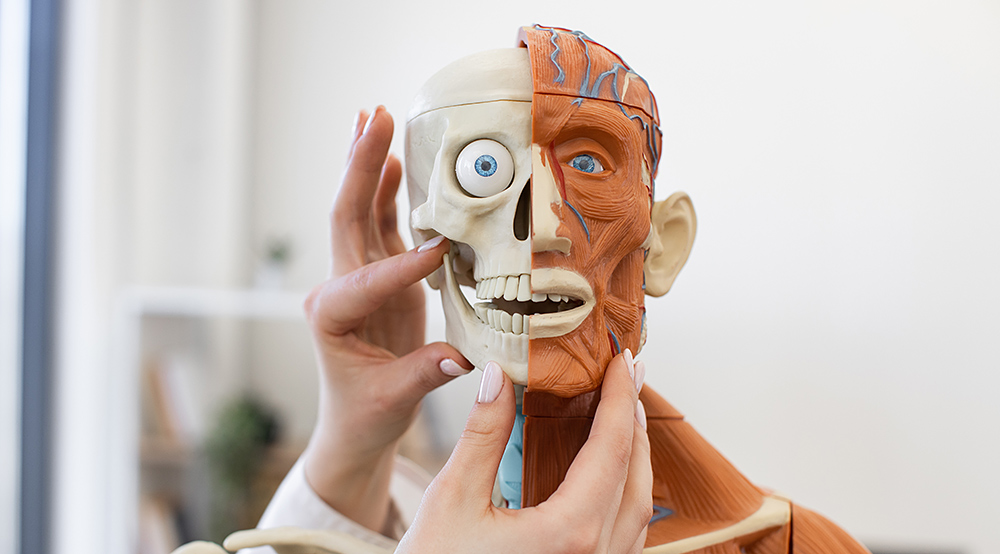
What makes this joint unique is its internal structure. Inside the joint, a small cartilage disc divides it into two compartments. Because of this structure, jaw movement occurs in two coordinated phases. First, the lower jaw rotates. Then it begins to glide forward. Both phases must happen in precise coordination for the joint to function smoothly.
Another important feature is that the joints on both sides of the head work at the same time while being connected by a single bone. The lower jaw functions as one unit. If movement becomes restricted or shifted on one side, the other side must adapt immediately. Clinically, this often appears as an asymmetric mouth opening where the jaw drifts slightly to one side.
The joint is also closely connected with the chewing muscles. When teeth are clenched, these muscles can generate hundreds of newtons of force. Even a small change in jaw position increases the load placed on the joint surfaces.
Because the TMJ combines high mobility, constant activity, and complex coordination, it is very sensitive to imbalance. For this reason, the earliest signs of dysfunction often appear as joint sounds or mild discomfort rather than severe pain.
Why the TMJ May Start Clicking
Bite Irregularities Are Not Always the Cause
Some dentists assume that clicking begins because of malocclusion or crowded teeth. Modern research does not support a direct cause and effect relationship between the visible type of bite and the development of TMJ dysfunction.
There are people with significant crowding who never experience pain or movement limitations. At the same time, patients with straight and well aligned teeth can develop joint clicking and discomfort.
The key difference is not the appearance of the teeth. What matters is how the lower jaw meets the upper jaw during closure and in which position the joint functions at that moment.
In younger years the body adapts more easily. Even when tooth contact is not ideal, the muscles and ligaments can maintain stability. Symptoms may not appear for a long time.
With age this ability to compensate gradually decreases. If the lower jaw closes in an unstable position, the load inside the joint becomes less balanced. This does not guarantee that dysfunction will develop. In some cases, however, it is under these conditions that the first functional signs appear, including joint clicking.
Tooth Loss Gradually Changes How the Joint Works
Imagine a tooth is removed. The pain disappears, chewing is still possible on the other side, and replacing the tooth is postponed. At first everything seems normal.
Over time, however, the position of the surrounding teeth begins to change. Neighboring teeth slowly tilt toward the empty space. The tooth on the opposite jaw may begin to move downward. The point where the teeth meet is no longer the same.
As a result, the lower jaw closes in a slightly different position than before. Each time the mouth closes, the joint has to adapt to this new alignment. These adjustments happen gradually and often go unnoticed.
A clicking sound may become the first clear signal that the system has shifted and the joint is no longer moving along its original path.
Tooth Wear With Age or Due to Bruxism
Teeth wear down slowly. The chewing surfaces become lower, the bite height decreases, and the lower jaw takes a higher position when the mouth is closed.
Even a few millimeters of difference change the way the joint works.
Treatment Performed in Stages
A crown a few years ago, then a filling by another dentist, later veneers. Each stage can be performed with high quality. The problem arises when the entire occlusion system is not evaluated as a whole.
The shape of the chewing surfaces affects the position of the lower jaw. If the contacts change gradually, the joint begins to work in a new position. The person does not feel this until clicks or discomfort appear.
Sudden Wide Opening of the Mouth
Sometimes clicking begins after prolonged dental treatment or severe hyperextension of the jaw. In this case, the symptom develops more quickly. However, it is not uncommon for changes to have already existed that were not previously apparent.
Stages of TMJ Dysfunction
We have already discussed that joint dysfunction rarely develops abruptly. More often, it is a gradual process.
Stage 1. Clicking Without Pain
At this stage, full range of motion is preserved. The mouth opens wide. There is no pain. There is only a sound.
The clicking occurs when opening or closing the mouth. Sometimes only the patient can hear it. Sometimes it can be felt with a finger in the joint area.
This is the stage of functional impairment. The joint can still cope with the load, but movement is no longer ideal. During this period, correction is most rapid.
Stage 2. Discomfort and Muscle Tension
Over time, the sound may be accompanied by fatigue in the jaw, tension in the temples, and pain when chewing hard food. The mouth may open slightly asymmetrically. The patient begins to chew mainly on one side. Episodic headaches appear.
At this stage, the joint is still mobile, but the overload is already affecting the muscles.
Stage 3. Limited Mouth Opening
If the disorder progresses, movement may become restricted. The mouth does not open fully. Sometimes there is a feeling of “jamming.”
The clicking may disappear. This is not a sign of improvement. More often, it means that the displaced structures no longer return to their previous position. The pain becomes more pronounced, especially when chewing or yawning.
Stage 4. Chronic Inflammation and Joint Wear
With prolonged overload, structural changes can begin to develop inside the joint. Persistent pain may appear, jaw movement becomes more limited, and the joint surfaces begin to wear.
Once the condition reaches this stage, treatment typically becomes more complex and requires a longer rehabilitation process.
How TMJ Disorder is Diagnosed
The main goal of diagnosis is to answer three questions:
- Is this a functional disorder or are there already structural changes?
- Is the process reversible?
- What exactly is causing the joint overload in your case?
Clinical Examination
Diagnosis always begins with a conversation. The doctor asks when the clicking started, whether there is pain, whether there have been any tooth extractions, orthodontic treatment, injuries, or teeth clenching.
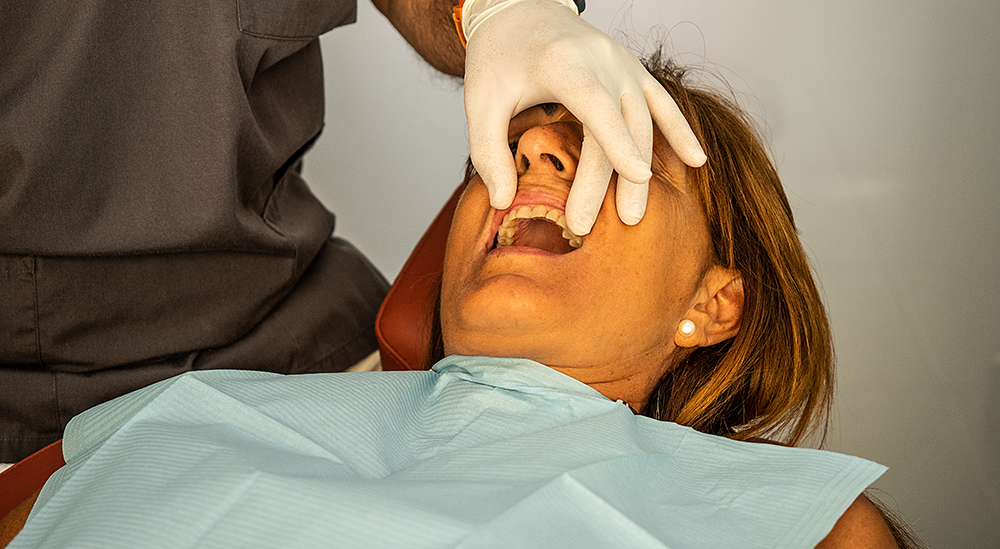
During the appointment, the doctor will check how wide your mouth opens, whether your jaw moves smoothly or deviates to one side, and whether there is pain when pressing on the chewing muscles. Then they will check how your teeth close and whether there is any displacement when you close your mouth.
This allows them to understand whether the mobility of the joint is preserved and whether there are signs of restriction.
Imaging and Functional Analysis
In many cases imaging studies are needed to understand what is happening inside the joint.
Computed tomography helps evaluate the bone structures. It shows the condition of the joint head and whether there are changes in its shape or signs of wear on the joint surfaces.
Magnetic resonance imaging is used to assess the soft tissues. It allows the doctor to see the position of the articular disc and detect signs of inflammation. MRI also helps determine whether the disc returns to its normal position when the mouth opens.
These tests are not ordered routinely. They are recommended only when clinical findings suggest that more detailed evaluation is necessary.
Functional Analysis of Jaw Movement
Another important step may be functional analysis. The patient sits in the chair while the doctor places small sensors or light markers on the jaw. The patient then opens and closes the mouth several times and makes gentle side to side movements.
A specialized system records the movement of the lower jaw and converts it into precise digital data. On the screen the dentist can see how the teeth come together, whether the jaw shifts during closure, and how it moves during opening.
This information helps answer a critical question. Does the joint function in a stable position, or does it shift slightly every time the mouth closes?
How TMJ Treatment Is Structured
The treatment approach depends on the stage of the condition and the results of the diagnostic evaluation. In most cases the first goal is to stabilize the position of the lower jaw and reduce stress inside the joint.
Custom Occlusal Splint
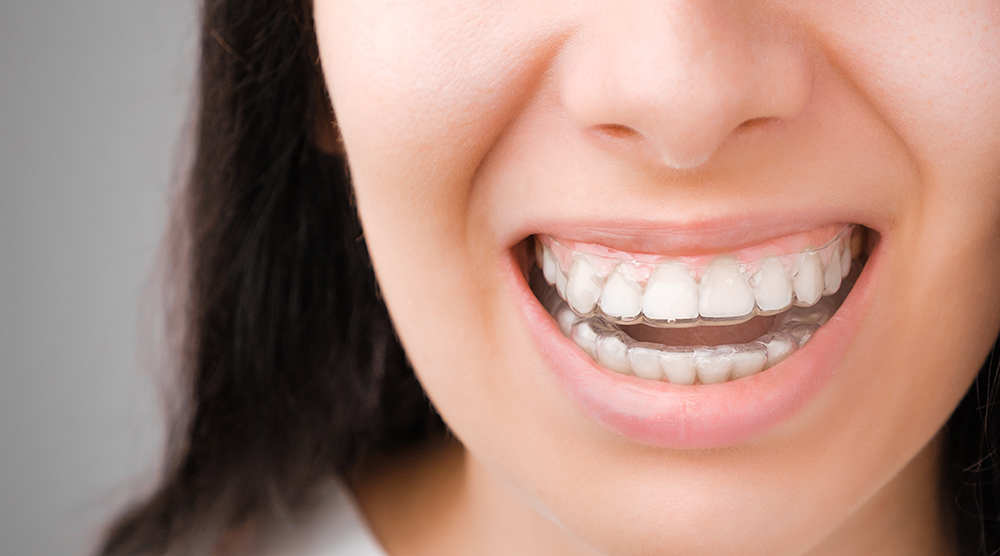
A custom occlusal splint is often used as the starting point of treatment. The device helps guide the lower jaw into a more stable position and reduces the load placed on the joint structures.
During the first few days patients may notice several temporary changes. Speech can feel slightly different. There may be a sensation of having a foreign object in the mouth. Some people feel mild pressure in the teeth or notice that their bite feels unusual.
These reactions are expected. The jaw is adapting to a new position and the muscles gradually begin to relax.
For some patients relief appears fairly quickly. The feeling of tension decreases, pain becomes milder, and the mouth begins to open more comfortably. For others the adjustment period may take several weeks.
Because the splint changes how the lower jaw is positioned, the way the teeth meet without the appliance may temporarily feel different. Some patients notice that the back teeth contact differently or do not fully touch. This stage is normal and is discussed with the patient before treatment begins.
Monitoring and Adjustment
The doctor assesses how the symptoms have changed, whether the clicking persists, whether the pain has decreased, and how the teeth close without the aligner. If necessary, the design is adjusted because the position of the jaw gradually stabilizes.
Sometimes, after a few weeks or months, the examinations are repeated if this was indicated initially. This allows the dynamics to be assessed and to understand whether the achieved position is sufficient.
If the initial cause was missing teeth, severe wear, or malocclusion, further rehabilitation is required after the joint has stabilized. This may include restoration of the chewing teeth, correction of the bite height, or orthodontic treatment.
What the Patient Feels During the Process
Most patients report a gradual decrease in pain and tension. Clicking may persist for some time, then become quieter or disappear. Sometimes the sound remains, but without pain or movement restriction. In this case, treatment is considered successful if function is restored.
The timing is individual. In functional cases, noticeable changes may appear within a few weeks. For more severe disorders, the process takes longer.
Final Thoughts
Clicking in the temporomandibular joint is usually not an emergency. It is not the same as acute dental pain or tooth decay that requires immediate treatment. Many people live with this symptom for years without serious complications.
Large international studies show that clinically significant TMJ disorders affect about 10 to 15 percent of adults. At the same time, joint sounds such as clicking are detected much more often, in up to 30 percent of the population.
When a patient seeks evaluation at the stage where there is only a sound without pain or movement restriction, the condition is usually functional. Diagnosis and correction during this period tend to be simpler, shorter in duration, and less costly.
When a person waits many years after tooth loss or major changes in the bite, treatment often becomes more complex and may require restoring the entire bite system.